


Aluminum Radial Ring Rolling: Process, Alloys & CNC Guide
Mastering Aluminum Alloy Radial Ring Rolling: From Precision Thermal Control to High-Efficiency Expansion
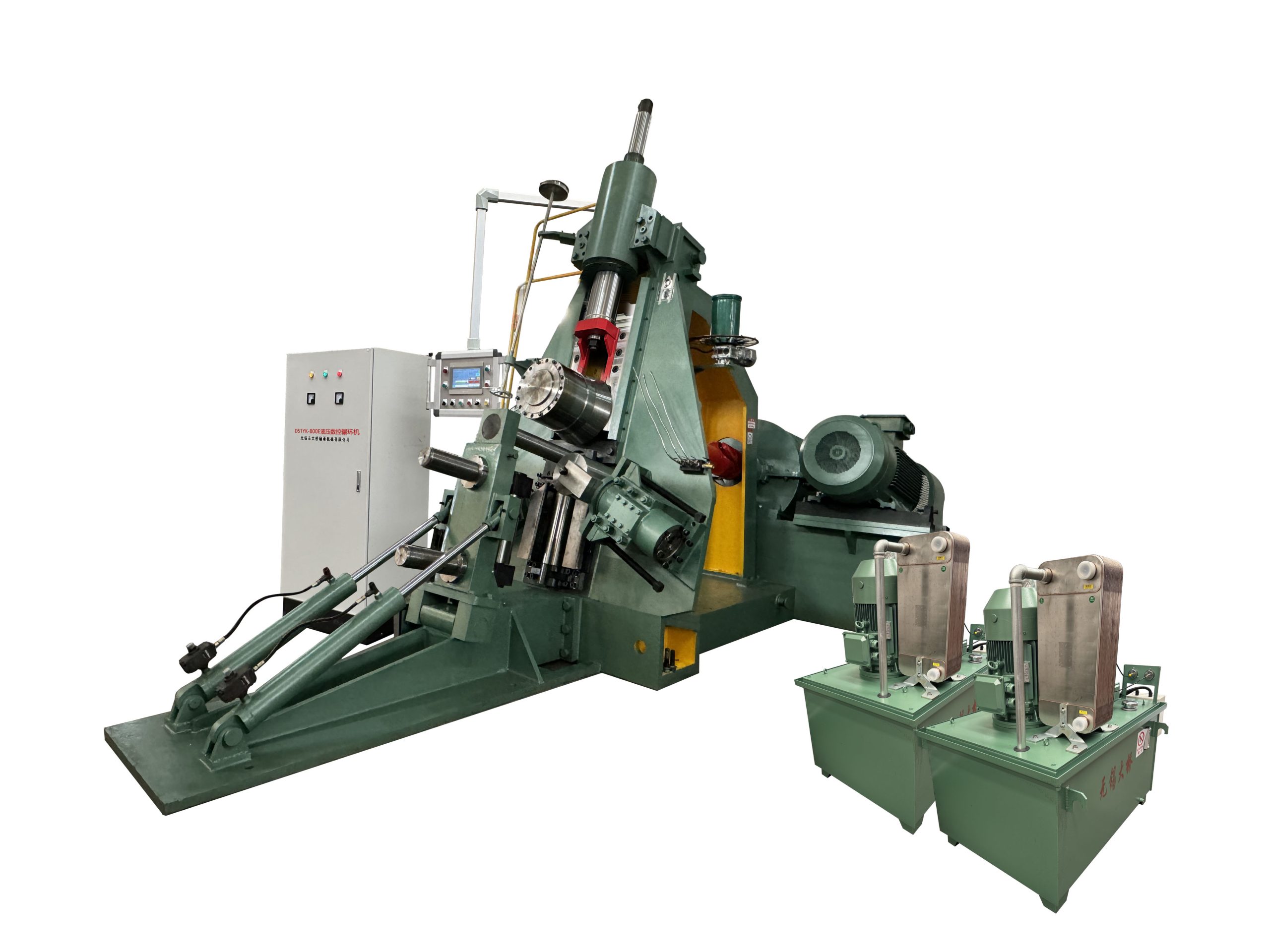
D51YK-800e hydraulic CNC ring rolling machine
1. How Radial Ring Rolling Works—and Why Aluminum Is Different
-
Low Forming Loads and Energy Consumption: At forging temperatures, the deformation resistance of aluminum is only 30%–40% that of standard steel. Combined with the localized contact zone of continuous rolling, tonnage requirements and energy consumption are substantially lower than those of equivalent closed-die forging presses.
-
High Thermal Sensitivity and Instability Risk: Because aluminum conducts heat rapidly, billet surfaces lose temperature quickly upon contacting the rolls. Additionally, aluminum’s high ductility paired with lower hot stiffness means improper feed rates or roll speeds can easily trigger defects such as buckling, edge cracking, fishtailing (earing), and wavy edges.
2. The 6 Core Stages of Aluminum Radial Ring Rolling
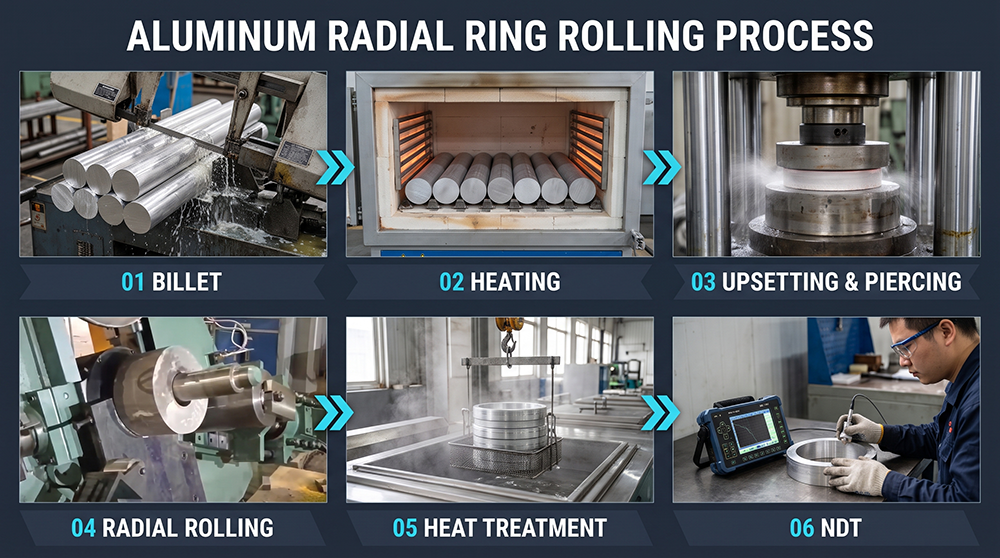
aluminum radial ring rolling process2
1. Alloy Selection and Billet Purity Control
2. Multi-Zone Billet Heating and Tooling Preheating
-
Precision Billet Heating: Billets are heated in multi-zone, uniform-temperature furnaces tailored to the exact alloy grade. Most ring rolling heating temperatures fall within 400–480°C (while certain wide-window forging alloys can exceed 500°C, operations must always stay safely below each alloy’s solidus limit). Thorough, uniform soaking ensures optimal plasticity while preventing localized overheating, grain coarsening, or incipient melting.
-
Die and Roll Preheating: Preforming dies, along with the radial ring roller’s main roll and mandrel, must be preheated to 150–300°C (ideally 200–300°C when applying water-based lubricants) while completing machine setup. Proper preheating prevents thermal shock cracking caused by rapid surface chilling and stabilizes heat retention throughout the rolling cycle.
3. Upsetting and Piercing (Preforming)
4. Precision Expansion on the Radial Ring Rolling Machine
-
In-Process Temperature Monitoring: Maintain real-time ring temperatures between 380–450°C (favoring the lower end for high-strength 7xxx alloys), ideally monitored continuously via infrared pyrometers.
-
Low Speed, High Pressure, Short-Stroke Multi-Pass Rolling: Avoid excessive peripheral rolling speeds. A strategy of lower speed, steady pressure, and small incremental reductions across multiple passes guides metal smoothly along the circumference—preventing adiabatic heat buildup that causes edge cracking while curbing fishtailing, bulging, and edge waviness.
-
Servo Rounding and Springback Compensation: As the ring approaches its target outer diameter, the machine transitions to a low-feed or zero-feed rounding phase supported by guide rolls to lock in circularity. Pass geometry and final CNC diameter targets must factor in aluminum’s higher elastic springback and thermal contraction rates.
5. Controlled Cooling and Heat Treatment
6. Precision Machining and Non-Destructive Testing (NDT)
3. Four Critical Shop-Floor Controls for Aluminum Ring Rolling
1. Respect Alloy-Specific Temperature Boundaries
2. Choose the Right Lubricant to Prevent Galling and Oxidation
3. Build In Springback Compensation
4. Process Reference Guide for Common Aluminum Alloys
| Alloy Series | Typical Grade | Recommended Rolling Window | Process Characteristics & Control Focus | Typical Ring Applications |
| 6xxx (Al-Mg-Si) | 6061 | 400–480°C | Wide processing window, excellent plasticity, easy to expand; typically finished with T6 heat treatment | General-purpose flanges, EV motor housing rings, structural support rings |
| 7xxx (Al-Zn-Mg-Cu) | 7075 | 370–450°C (strictly below 460°C) | Ultra-high strength with a narrow window and low solidus; prone to edge cracking and overheating; requires low speed and light reductions | High-load aerospace connector rings, lightweight high-strength wheel rims, fastening support rings |
| 2xxx (Al-Cu) | 2219 | 380–460°C | Excellent high-temperature strength and weldability; highly sensitive to heating uniformity and heat loss, requiring tight thermal control | Aerospace annular connectors, duct flanges, engine gaskets, and casing rings |
| 5xxx (Al-Mg) | 5083 | 380–450°C | Non-heat-treatable with superior corrosion resistance and cryogenic toughness; guard against high-temp magnesium oxidation and edge cracking | Pressure vessel sealing rings, shell reinforcing rings, marine corrosion-resistant flanges |
4. Key Applications and Equipment Selection Guidelines
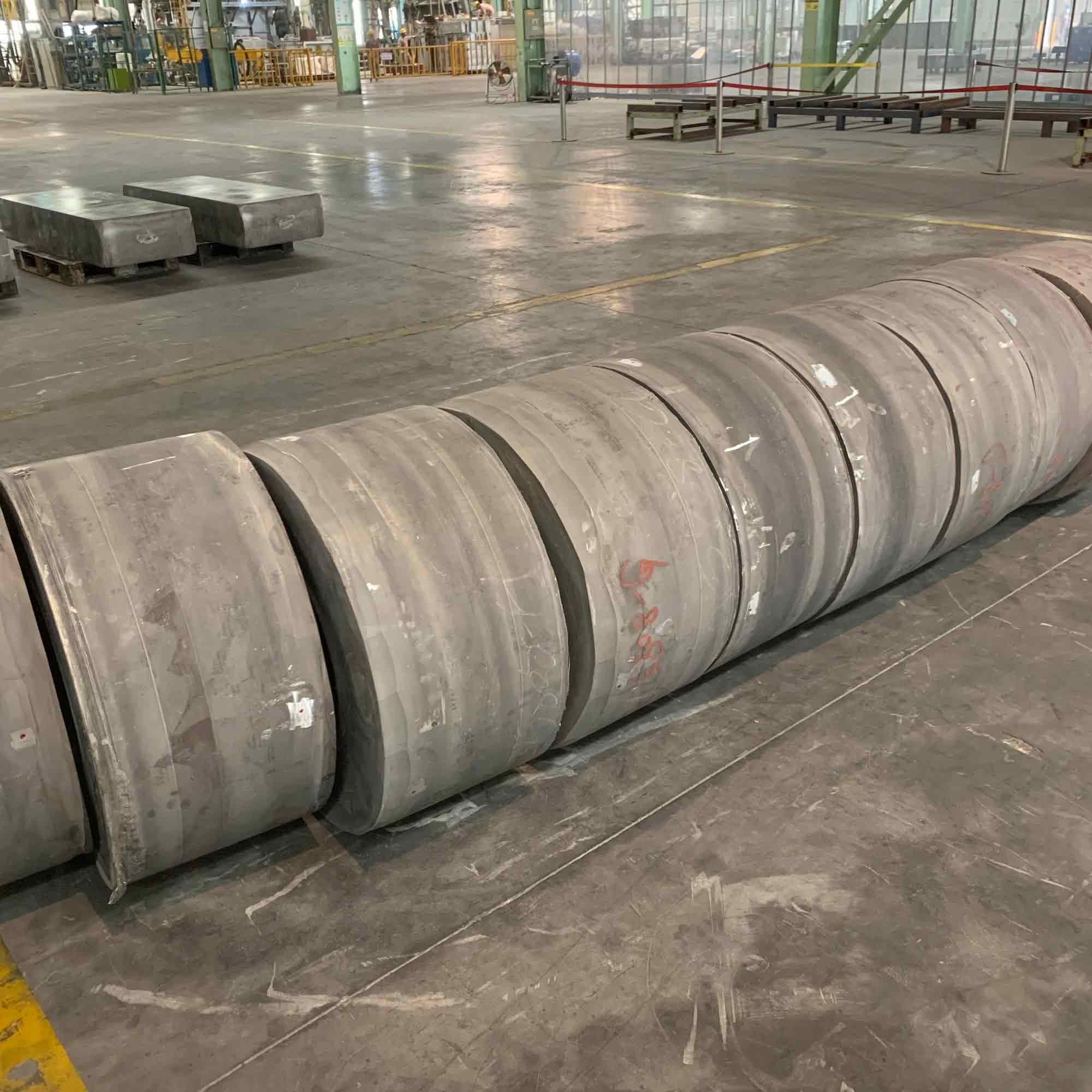
ring1 (4)
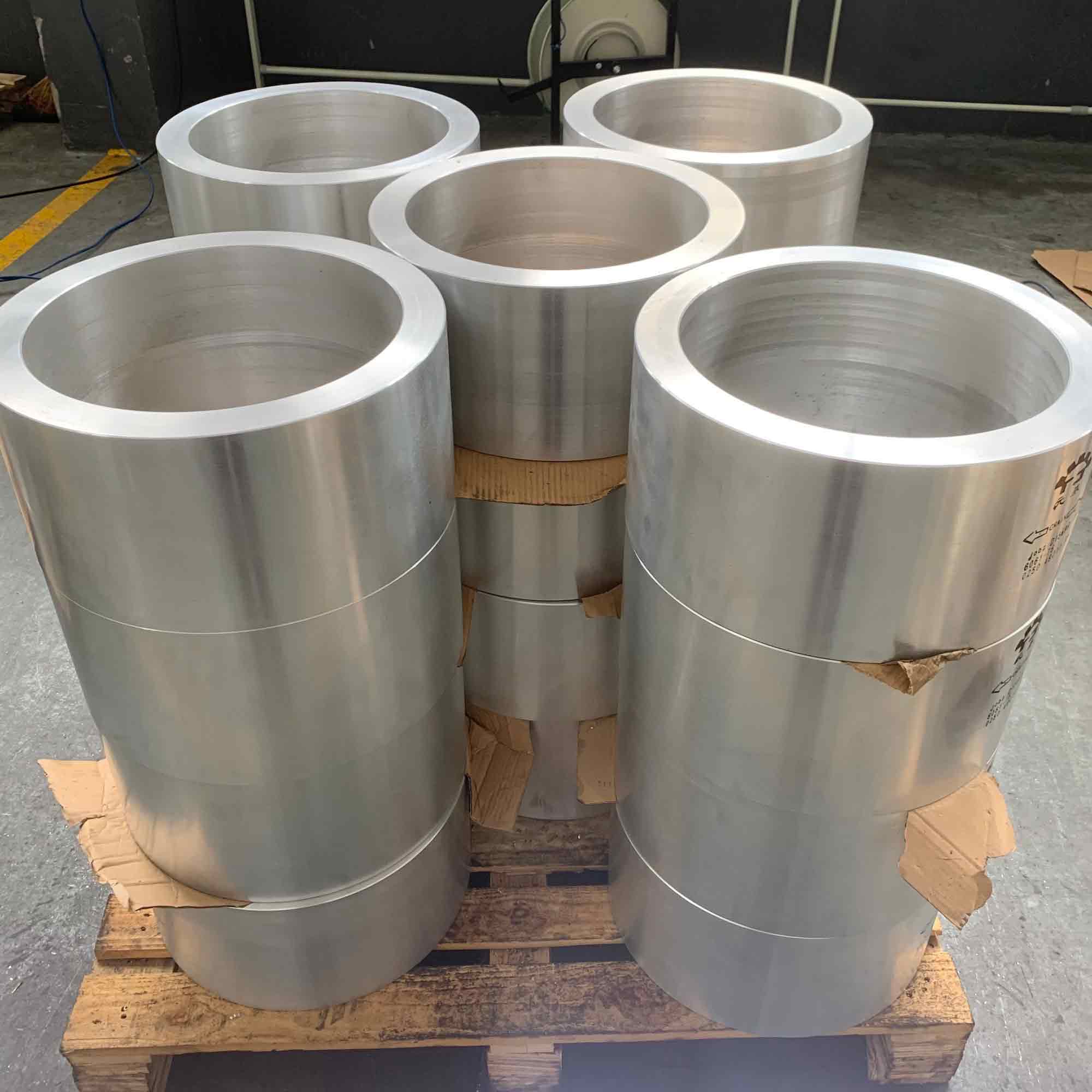
ring1 (1)
ring1 (2)
ring1 (3)
-
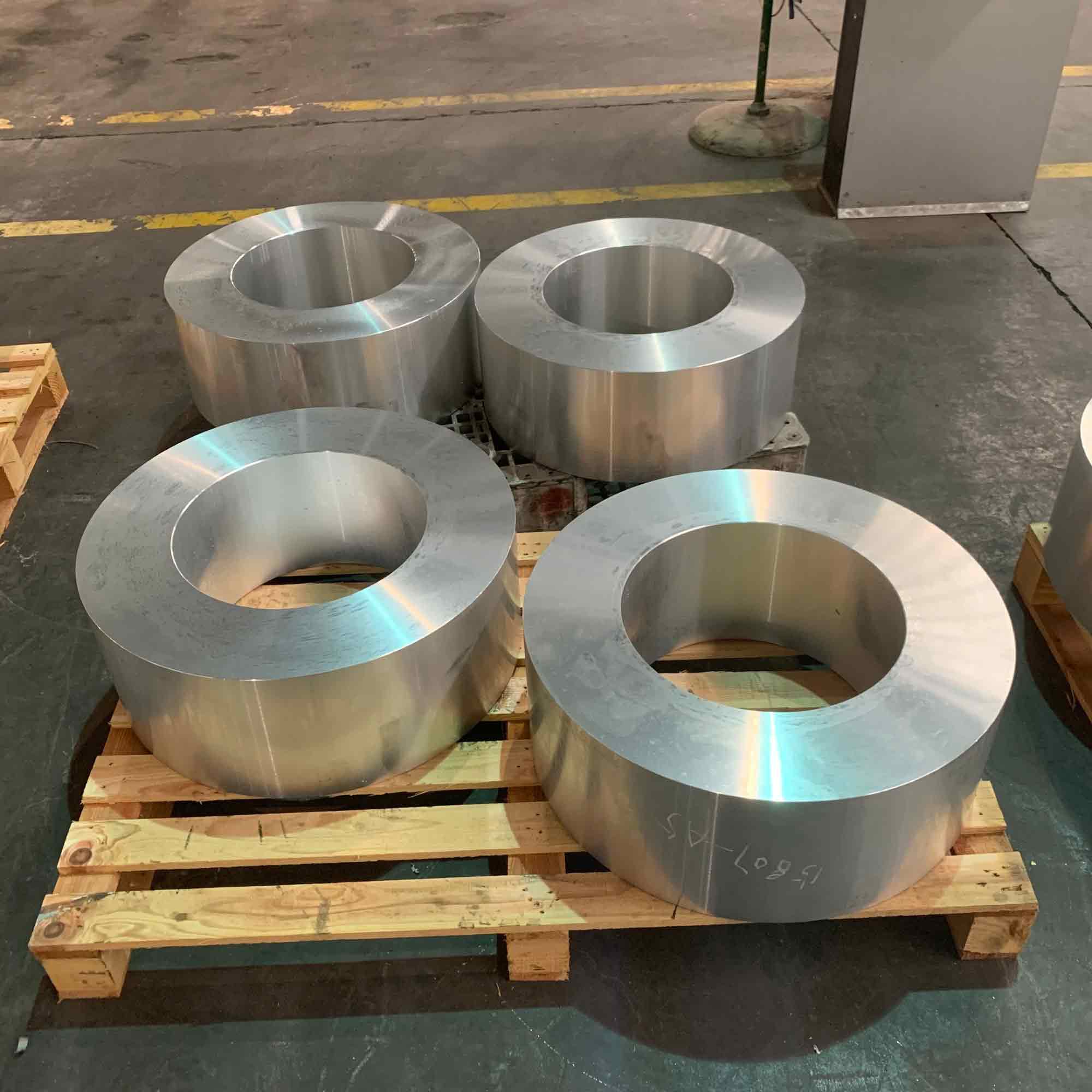
Aerospace: Annular structural connectors, duct flanges, engine casing rings, and high-temperature gaskets.
-
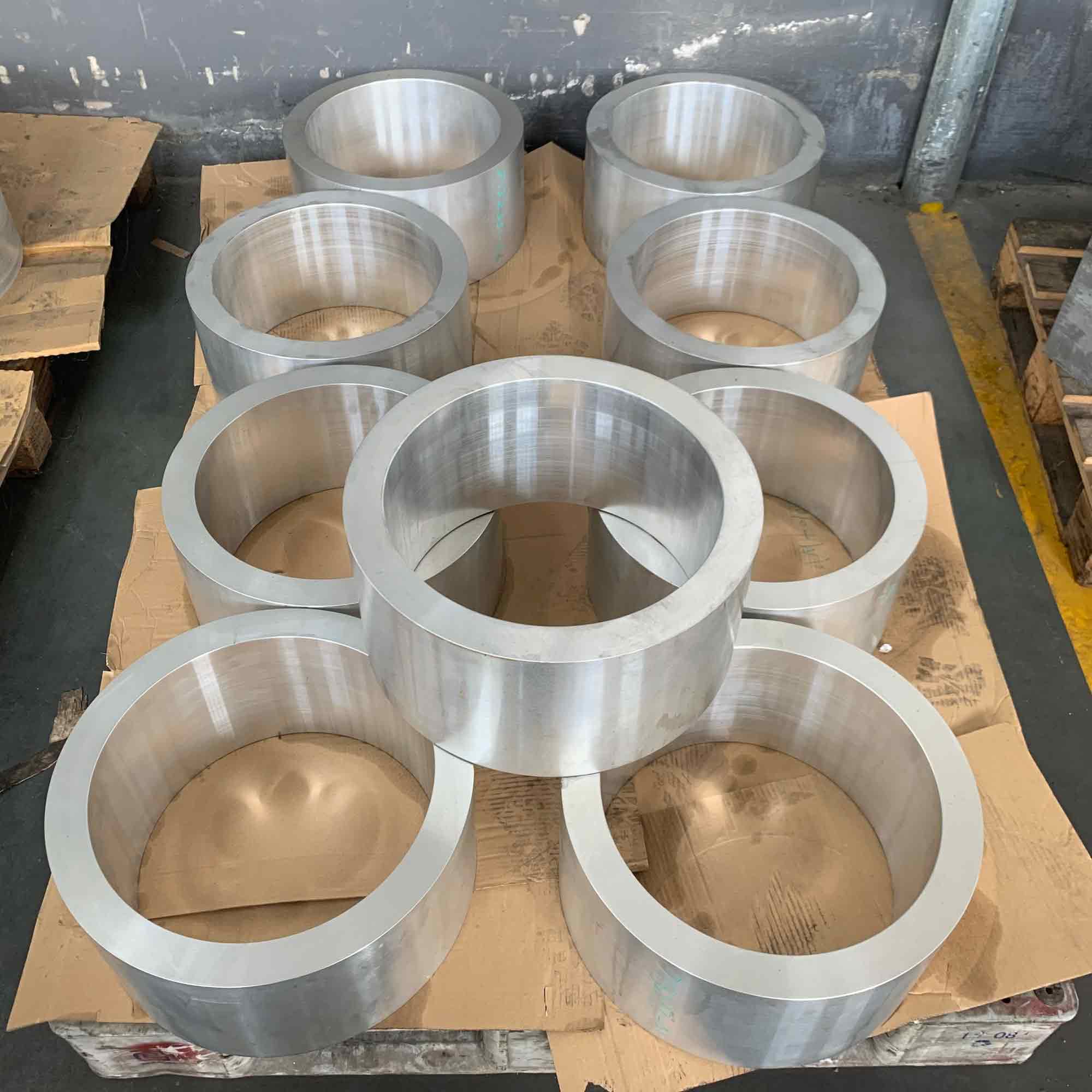
Automotive & EV Transportation: Lightweight high-strength structural rings, support rings, wheel rims, and electric drive motor housing/end-bell rings.
-
Pressure Vessels & Precision Industry: Corrosion-resistant sealing rings, vessel reinforcing rings, and high-strength load-bearing rings for medical and precision machinery.
What to Look for in a Radial Ring Rolling Machine for Aluminum
-
High-Response Servo Displacement Control: An electro-hydraulic or all-electric servo radial feed system with micron-level closed-loop positioning to execute smooth, short-stroke multi-pass reductions and accurate springback compensation.
-
Precision Online Diameter Measurement & Active Rounding: High-stability laser or mechanical contact measuring units paired with synchronized guide rolls to prevent ovality and wobble in thin-walled aluminum rings.
-
Integrated Thermal & Lubrication Automation: Built-in roll preheat monitoring, online infrared billet pyrometers, and automated atomized spray lubrication systems to minimize cycle-to-cycle variation and guarantee high batch consistency.


